
In our visually saturated world, we are all photographers. The smartphones in our pockets have given us the ability to document every moment, from the mundane to the magnificent. We take billions of photos every day. Yet, among this endless stream of images, some stand out. They make us pause, think, and feel. They tell a story without a single word. What separates a simple snapshot from a truly compelling photograph? The answer lies beyond the gear and the filters; it’s rooted in a deep understanding of the art and science of capturing light, emotion, and moments. It’s about learning to see the world not just with your eyes, but with intention.
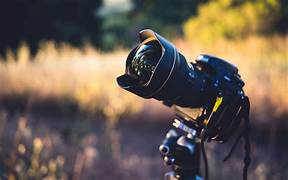
This journey from being a picture-taker to becoming a photographer begins with mastering the technical foundation. The most powerful camera in the world is useless without understanding the “Exposure Triangle” – the three core elements that control how light enters the camera and creates an image.
The Technical Trinity: The Exposure Triangle
- Aperture: Think of the aperture as the pupil of your camera’s eye. It’s an opening inside the lens that can widen or narrow to control the amount of light reaching the sensor. It’s measured in “f-stops,” such as f/1.8, f/4, or f/16. The counter-intuitive part is that a smaller f-number (like f/1.8) means a wider opening, letting in more light. But aperture does more than just control brightness; it’s the primary tool for controlling “depth of field.” A wide aperture (f/1.8) creates a shallow depth of field, where your subject is sharp and the background is beautifully blurred (an effect known as “bokeh”). A narrow aperture (f/16) creates a deep depth of field, keeping everything from the foreground to the background in sharp focus, which is ideal for sweeping landscapes.
- Shutter Speed: If aperture is the size of the window, shutter speed is how long the window stays open. It’s the duration for which the camera’s sensor is exposed to light, measured in seconds or fractions of a second (e.g., 1/1000s, 1/60s, 2s). Shutter speed is your tool for controlling motion. A fast shutter speed (like 1/2000s) will freeze motion with crisp clarity, perfect for capturing a bird in flight or a splash of water. A slow shutter speed (like 5s) will create motion blur, transforming car taillights into streaks of light or a waterfall into a silky, ethereal cascade.
- ISO: ISO represents your camera sensor’s sensitivity to light. A low ISO (e.g., 100 or 200) is used in bright conditions and produces the cleanest, highest-quality images. As the environment gets darker, you can increase the ISO (to 1600, 3200, or higher) to make the sensor more sensitive, allowing you to capture an image without needing a flash. However, this comes with a trade-off. Higher ISO settings introduce digital “noise” or grain, which can reduce image quality. The goal is always to use the lowest ISO possible for the given lighting situation.
Mastering the interplay between these three elements is the key to taking full creative control of your camera.
The Artistic Vision: Composition and Light
Once you understand the technicals, you can focus on the art of composition – the arrangement of elements within your frame. Strong composition guides the viewer’s eye and creates a sense of harmony, tension, or story.
- The Rule of Thirds: Imagine your frame is divided into a 3×3 grid. The Rule of Thirds suggests placing key elements of your scene along these lines or at their intersections. This simple technique creates a more balanced and visually interesting image than simply centering the subject.
- Leading Lines: Use natural lines in your scene – a road, a fence, a river – to lead the viewer’s eye towards your main subject. This creates a sense of depth and journey within the photograph.
- Framing: Use elements within the scene, like a doorway, a window, or overhanging tree branches, to create a natural frame around your subject. This adds context and draws focus.
Beyond composition, the most crucial ingredient in all of photography is light. Photography literally means “drawing with light.” Understanding the quality and direction of light will transform your images. The harsh, direct sunlight of midday creates strong, unflattering shadows. In contrast, the soft, diffused light of an overcast day is perfect for portraits. The “Golden Hour” – the period shortly after sunrise and before sunset – bathes the world in a warm, golden light that is magical for almost any subject. The “Blue Hour” – the time just before sunrise and after sunset – offers a cool, tranquil, and moody light. Learning to see and use light is perhaps the single most important skill a photographer can develop.
The Final Polish: Post-Processing
Finally, post-processing is not “cheating”; it is the modern equivalent of the traditional darkroom. Tools like Adobe Lightroom and Photoshop allow a photographer to complete their vision. This is where you can fine-tune exposure, adjust colors to evoke a specific mood (color grading), crop for a stronger composition, and sharpen details. The goal of good post-processing is to enhance the image and bring it closer to the feeling you had when you captured it, not to create something artificial.
Photography is a lifelong journey of learning and discovery. It teaches you to slow down, to observe the world more carefully, and to find beauty in the overlooked. It’s a powerful medium for self-expression and storytelling. So, pick up your camera, move beyond the automatic settings, and start framing the world with your unique vision.
fdrdtf